

TEFAF NEW YORKNew York, May 14-19, 2026 Park Avenue Armory, New York Booth 331
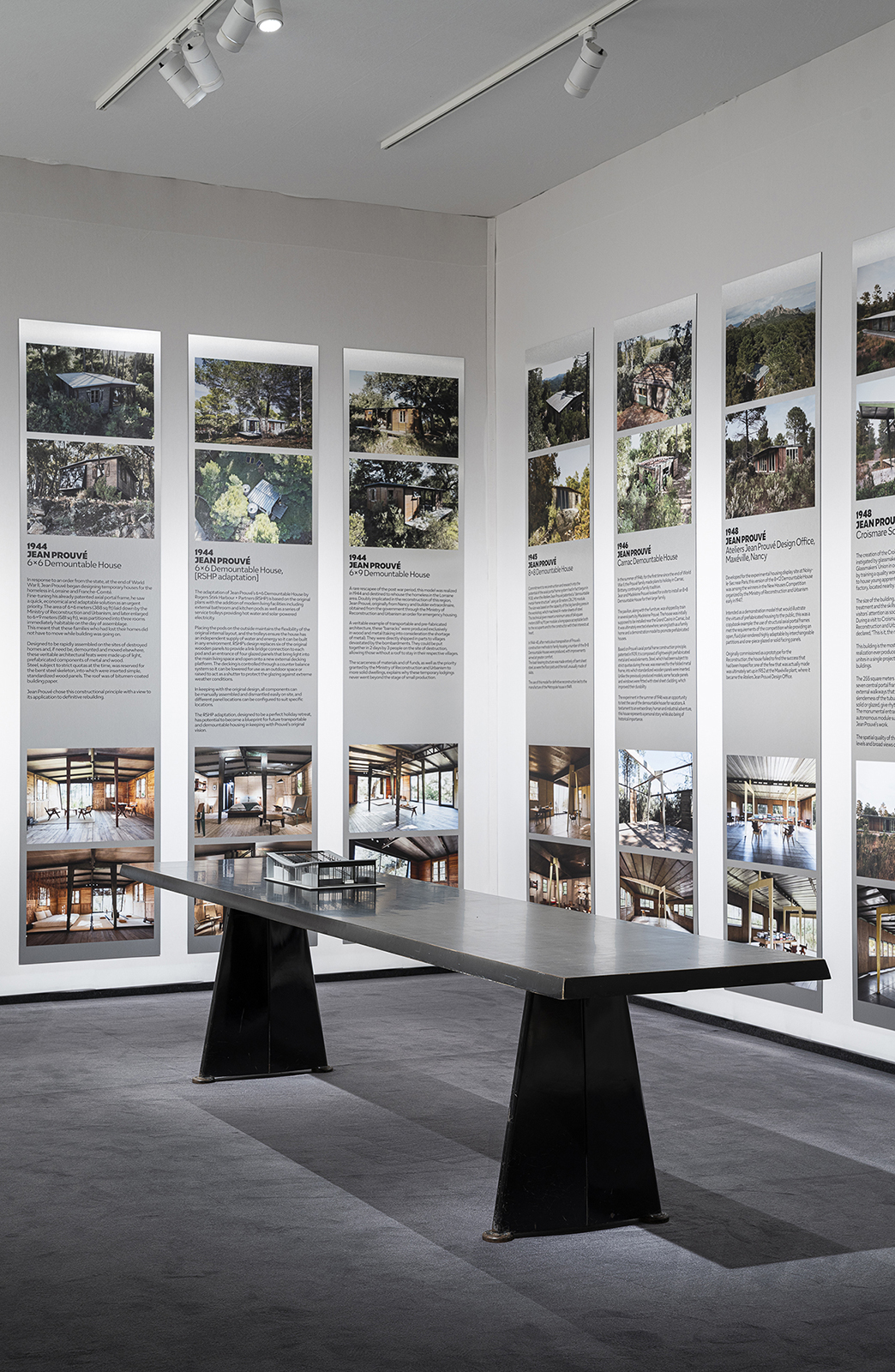
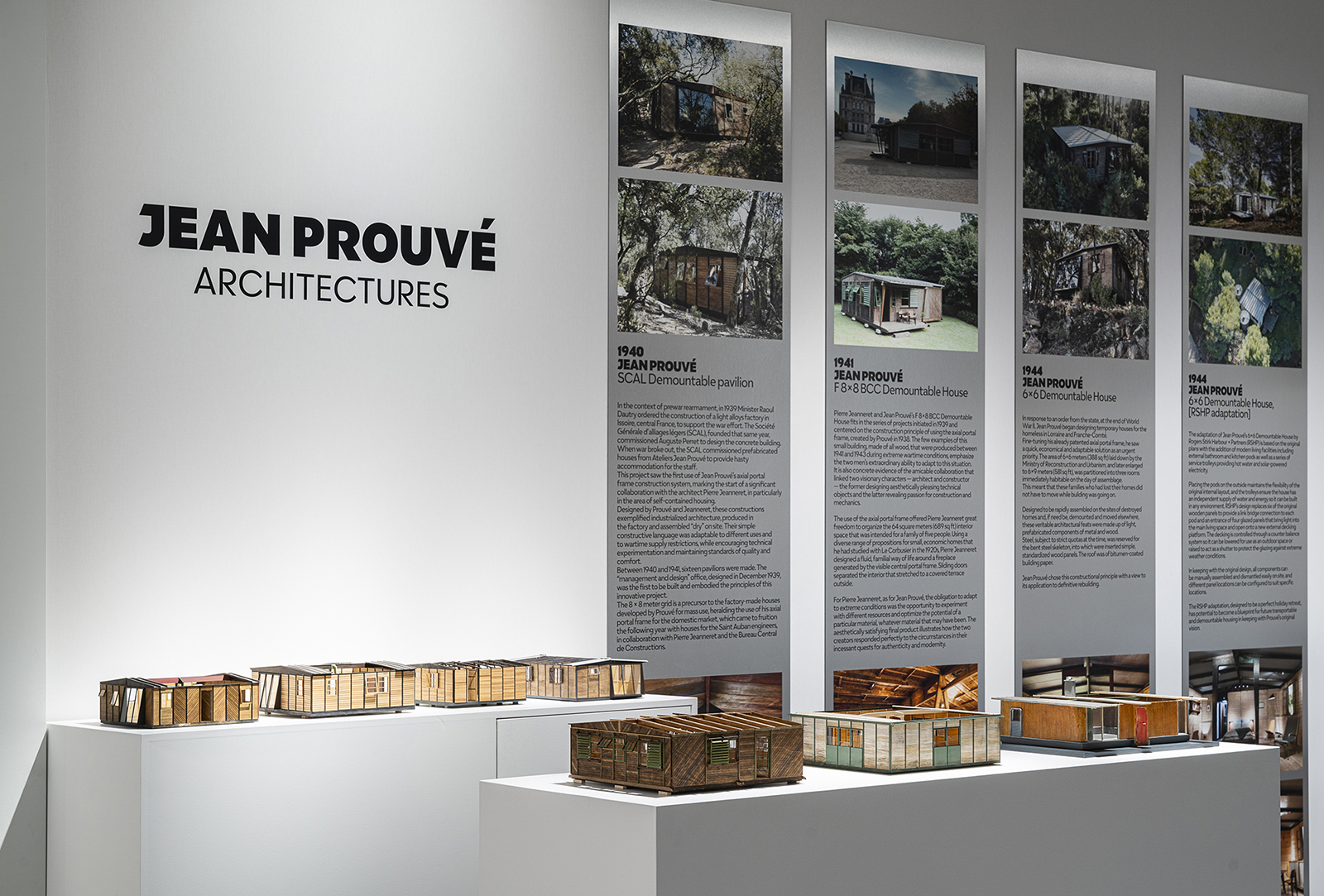
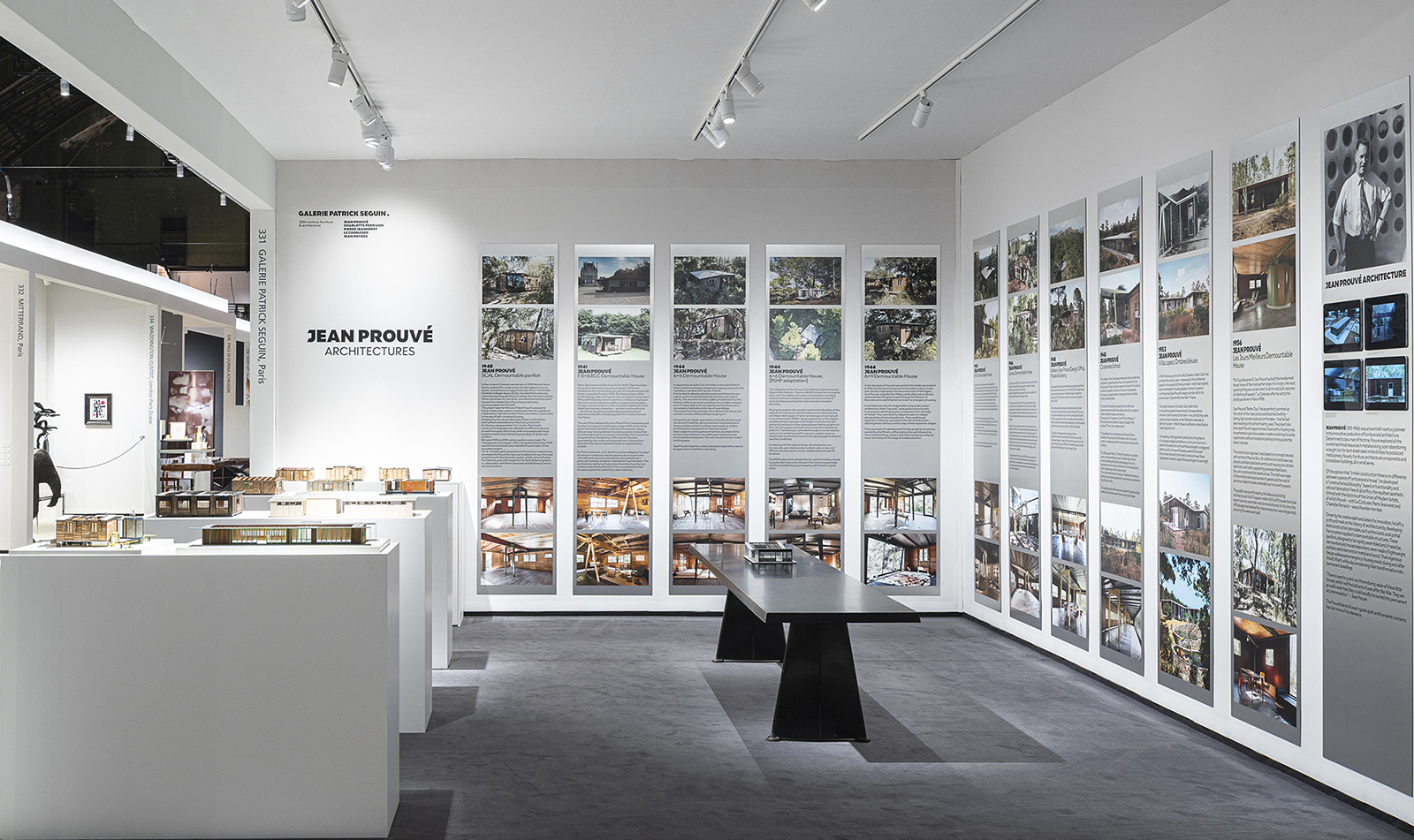
Exhibiting for the fifth time at TEFAF New York, GALERIE PATRICK SEGUIN is presenting a space devoted to the historic architectural work of JEAN PROUVÉ. Twelve pieces of demountable architecture, designed between 1939 and 1956, will be presented and documented around a 3.30-meter-long Centrale table, a model of exceptional rarity.
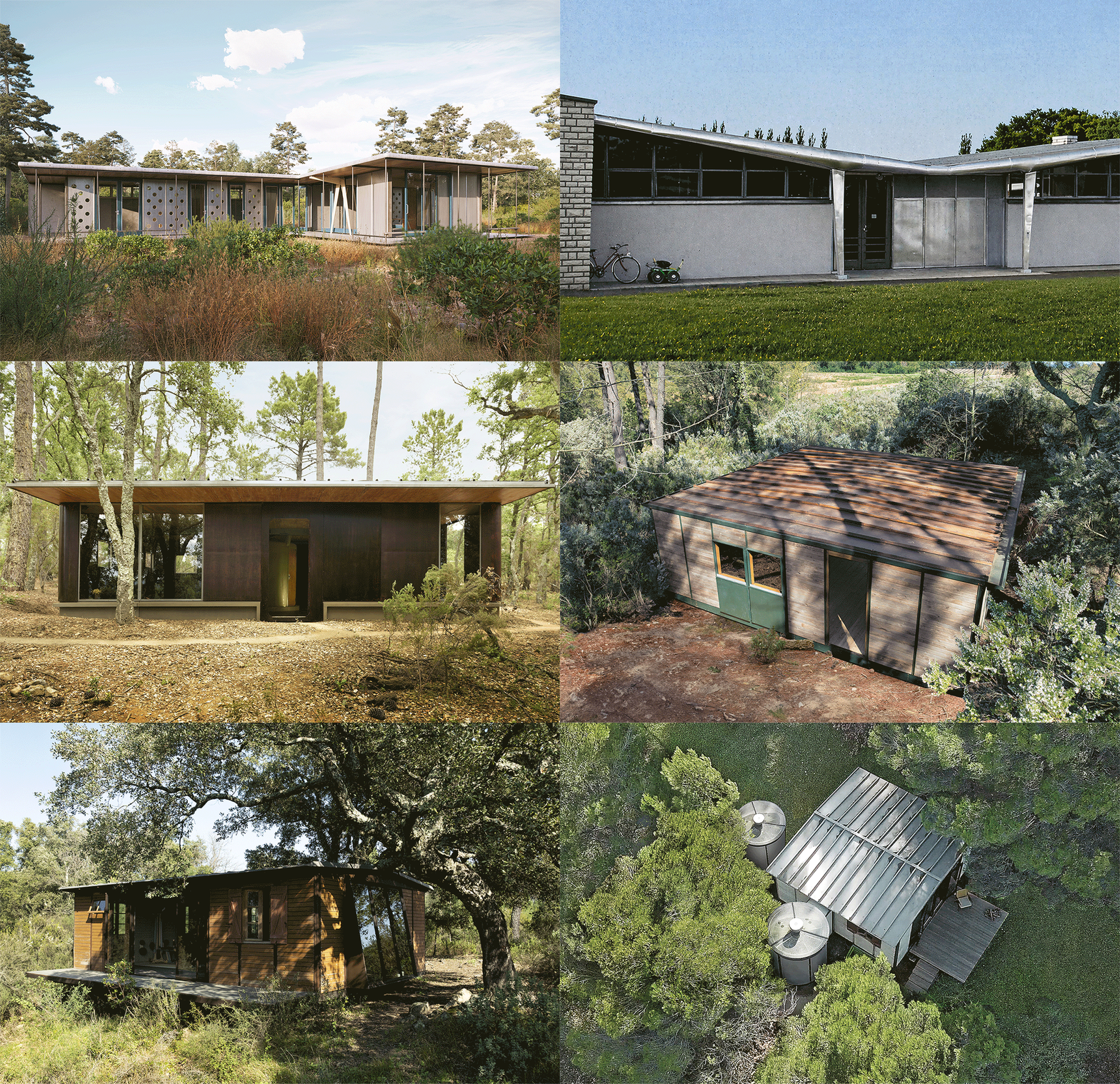
Organized as a structured presentation, the stand highlights the consistency of the constructive system developed by Jean Prouvé, and its capacity for adaptation to different scales and functions. The twelve projects are presented through models with explanatory texts and video documentation, providing both a historical and technical reading of Prouvé’s architectural work.
For the occasion, the gallery brings together important pieces of mid-20th century demountable architecture designed by Jean Prouvé, including the SCAL pavilion (1940), the BCC house (1941), the 6x6 and 6x9 emergency housing units (1944) and 8x8 reconstruction unit (1945), as well as his Carnac vacation house (1946), the Better Days house (1956), and school and office buildings such as the Croismare glassmaking school (1948) and the Maxéville design office (1948). Also, the unique architectures of the Villa Lopez (1953) and the Valençaude school (1954) will be shown to the public for the very first time.
Finally, the 2015 adaptation by the late British architect and Pritzker Prize laureate RICHARD ROGERS of the 6x6 demountable house highlights the enduring relevance and timelessness of Prouvé’s constructive principles.
At the center of the stand, a monumental 3.30-meter-long table defines the space. Designed in 1952 for the Antony Cité Universitaire student residences, just outside Paris, this extremely rare piece is a major milestone in Prouvé’s work. It summarizes his explorations into the use of folded steel, begun in the 1930s, demonstrating its technical qualities in the very structure of the furniture. A true collector’s piece, the table gives the stand a powerful architectural presence, entirely in keeping with the projects displayed.
“There is no difference between the construction of a piece of furniture and a house.”
Jean Prouvé
Through this collection, Galerie Patrick Seguin reveals the coherence of a body of work where architecture and furniture are driven by the same constructive demands. The twelve works of demountable architecture dialog with the 1952 Centrale table, the synthesis of a way of thinking in which structure generates form.