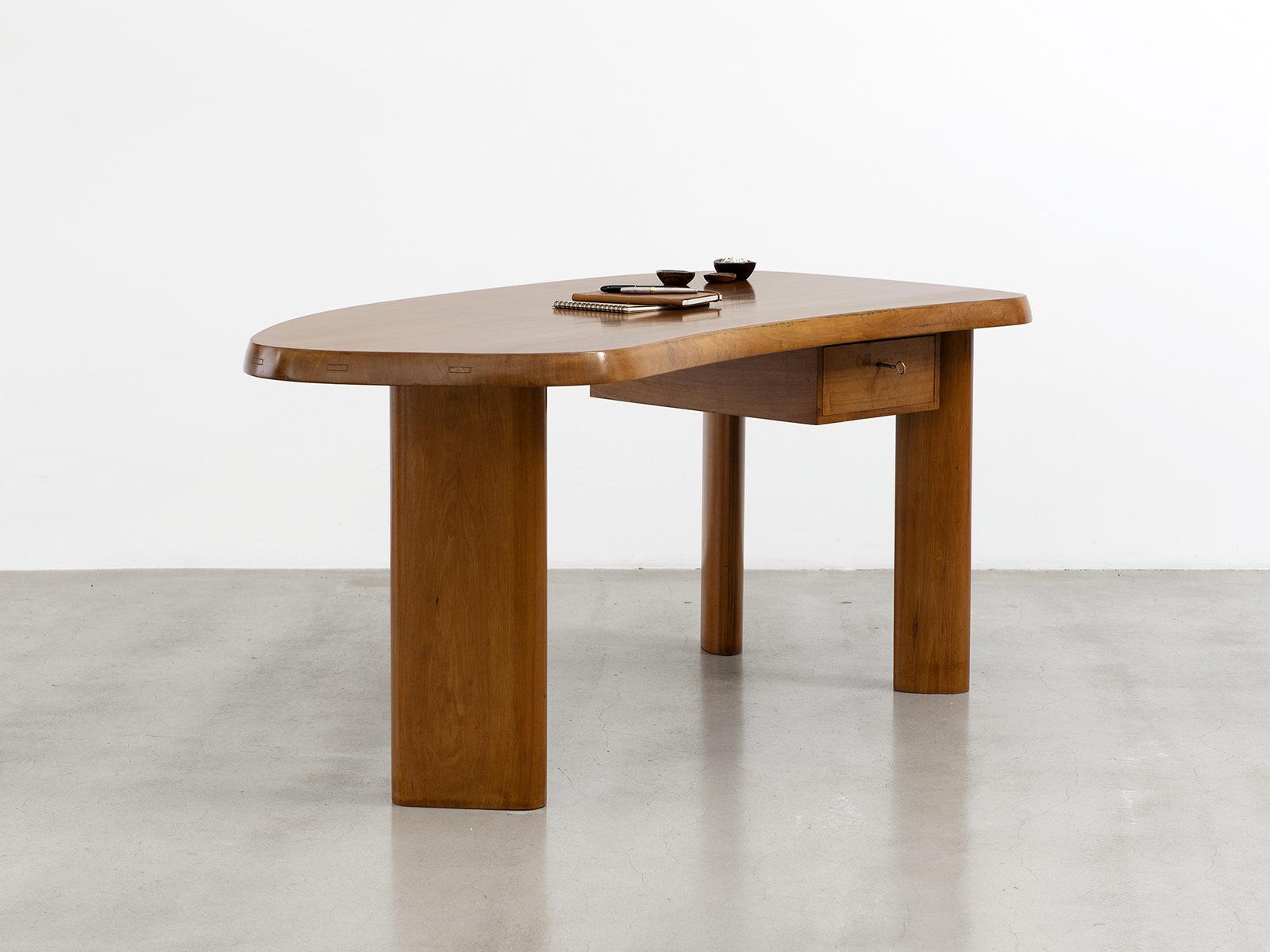
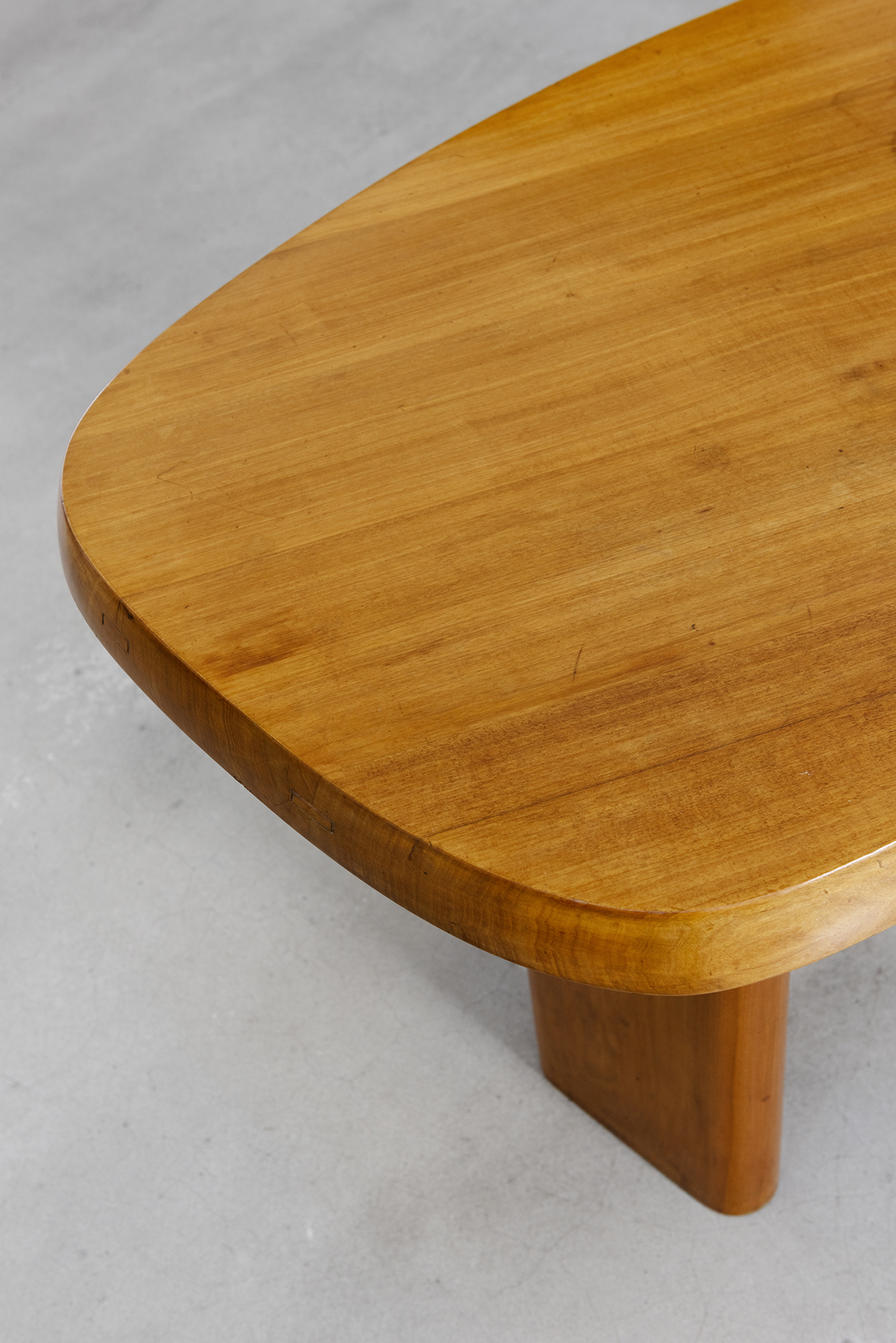
Focus on ‘Free Form’ by Charlotte Perriand
At the end of the 1930s, CHARLOTTE PERRIAND developed a new formal language, directly inspired by nature and by the observation of bodily gestures. She began designing “Forme Libre” tables and desks, whose irregularly shaped tops broke with the strict geometry of traditional furniture design.These forms are not merely expressive: they respond to a careful consideration of use, circulation around the object, and user comfort.
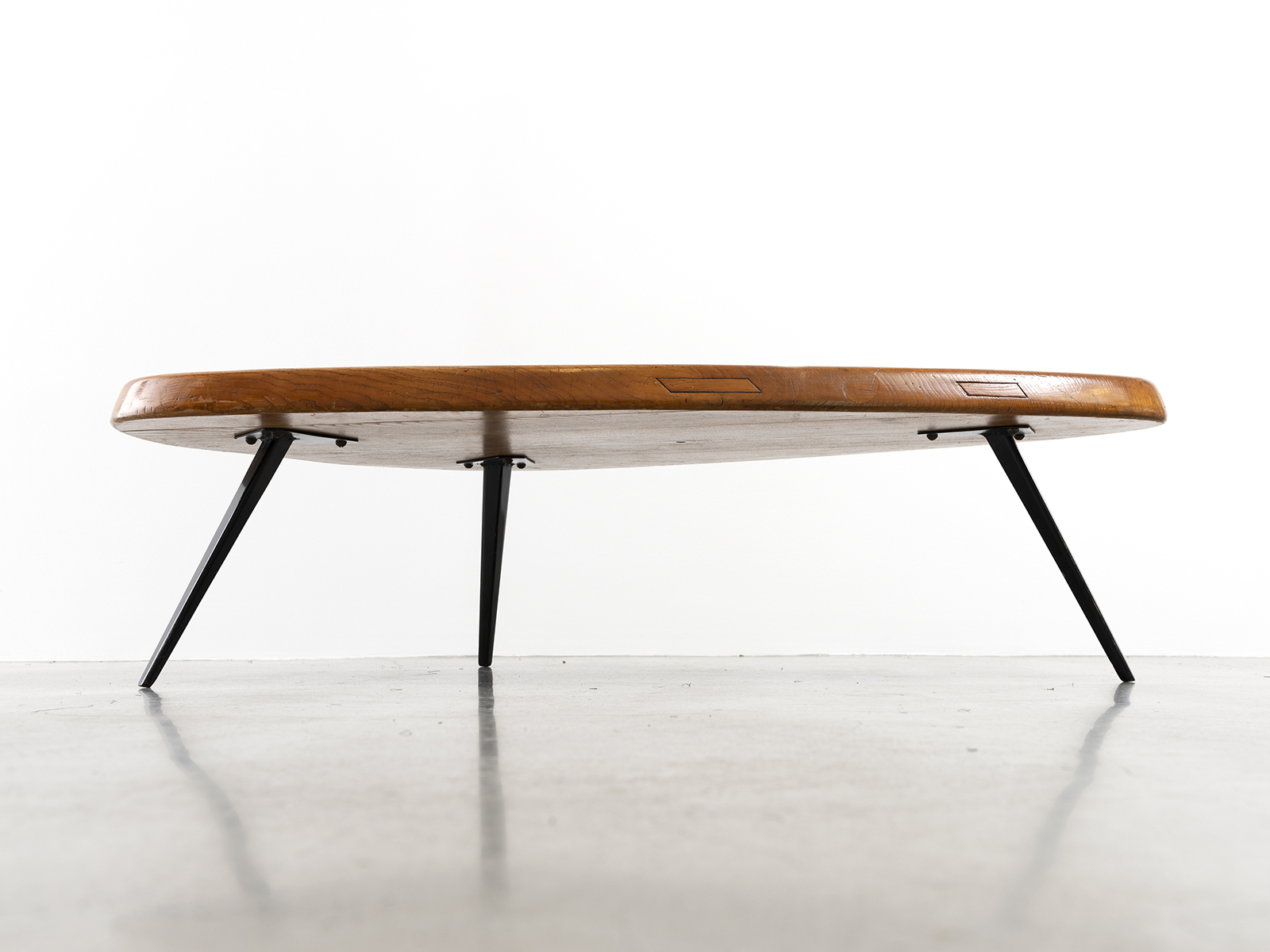
FORME LIBRE LOW TABLE, CA. 1956
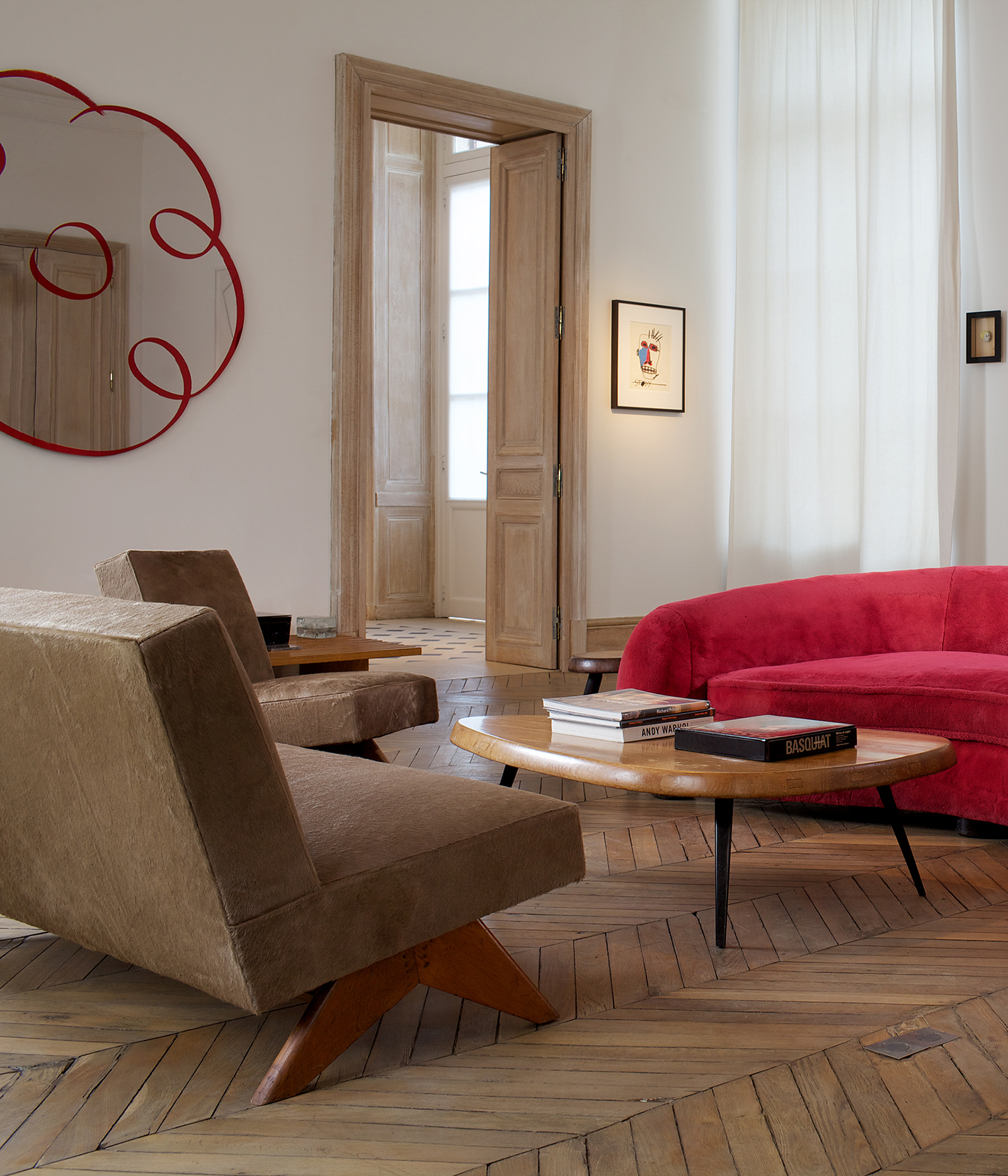
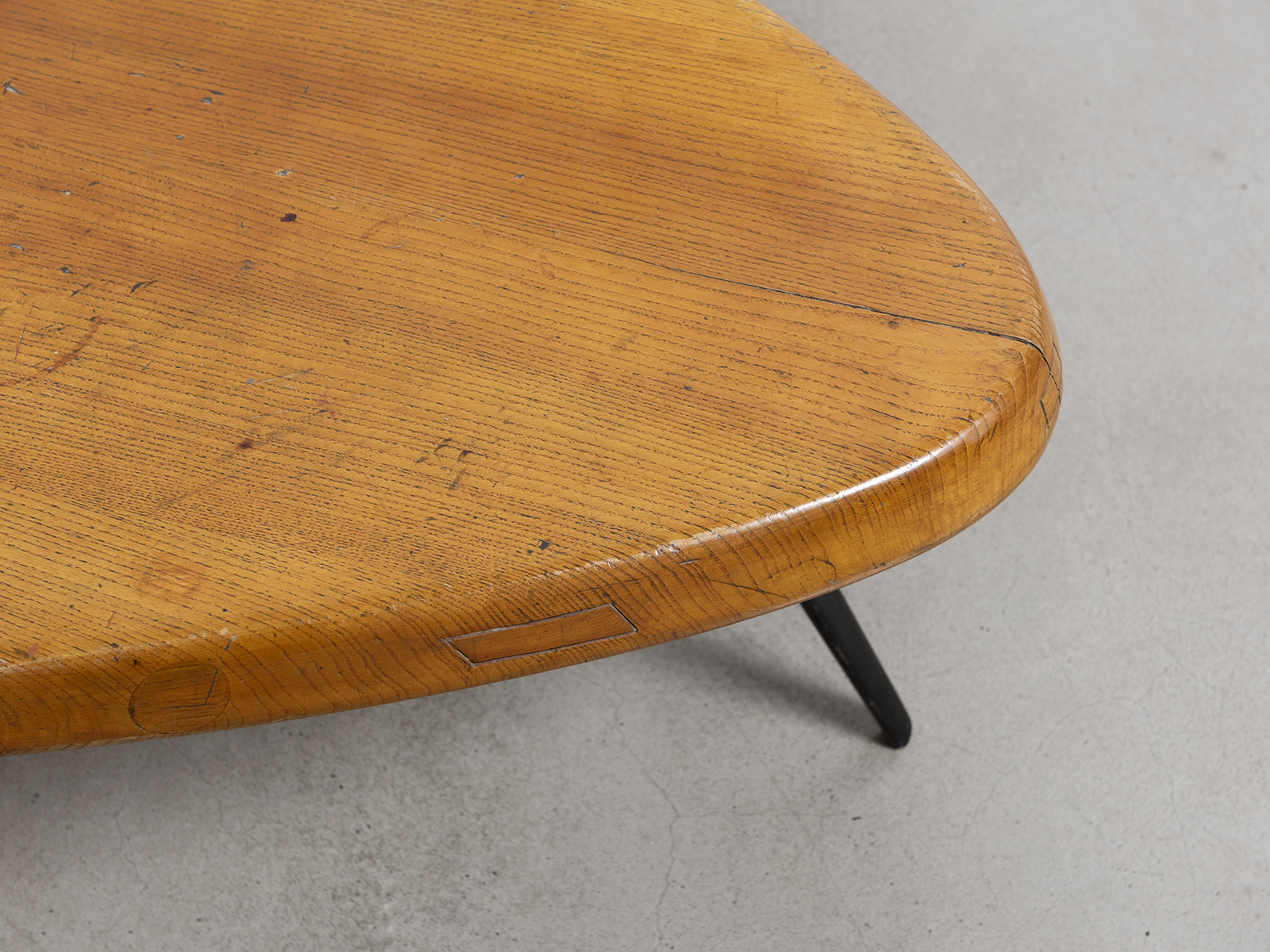
The “Forme Libre” low table, produced circa 1956, extends these explorations on a more domestic scale. Its solid oak top, with its soft lines, emphasizes the natural pattern of the wood while structuring the space in a fluid manner. The thickness of the top and the softened edges reinforce the object’s tactile dimension. The three tapered legs in bent sheet steel by JEAN PROUVÉ ensure stability while introducing a contrast of materials and a sense of lightness.
FORME LIBRE DESK, CA. 1960
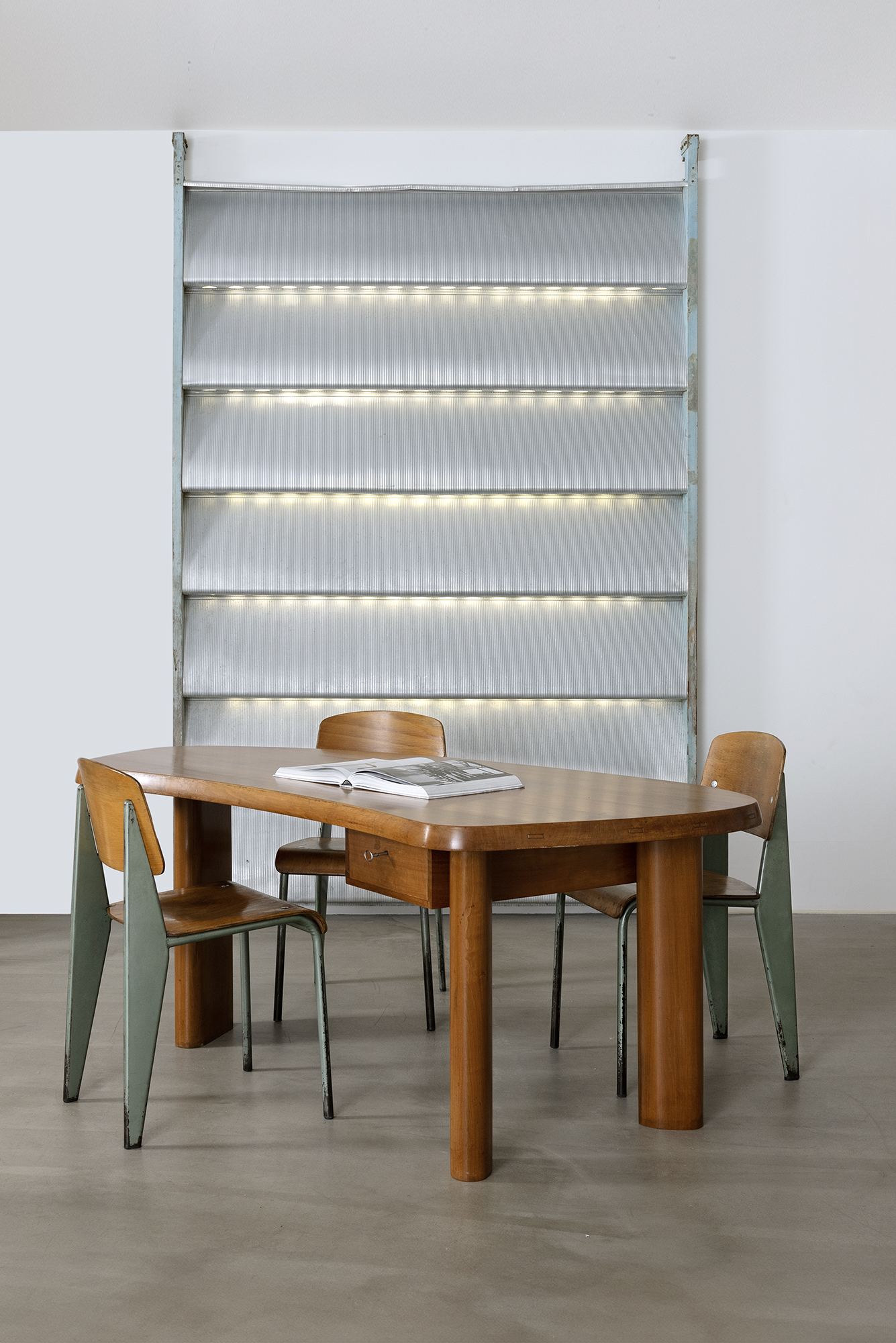
The desk, created circa 1960, is part of this approach. Made of solid wood, it highlights the material’s sensory qualities—density, warmth, and grain. The thickness of the top, the visible joinery, and the slightly inclined edges all contribute to an approach that is both constructive and tactile. The design naturally follows the working position and the contact of the hand, reflecting a close attention to ergonomics.