Focus on Jean Prouvé’s S.A.M. no. 502 table, ca. 1951
JEAN PROUVÉ
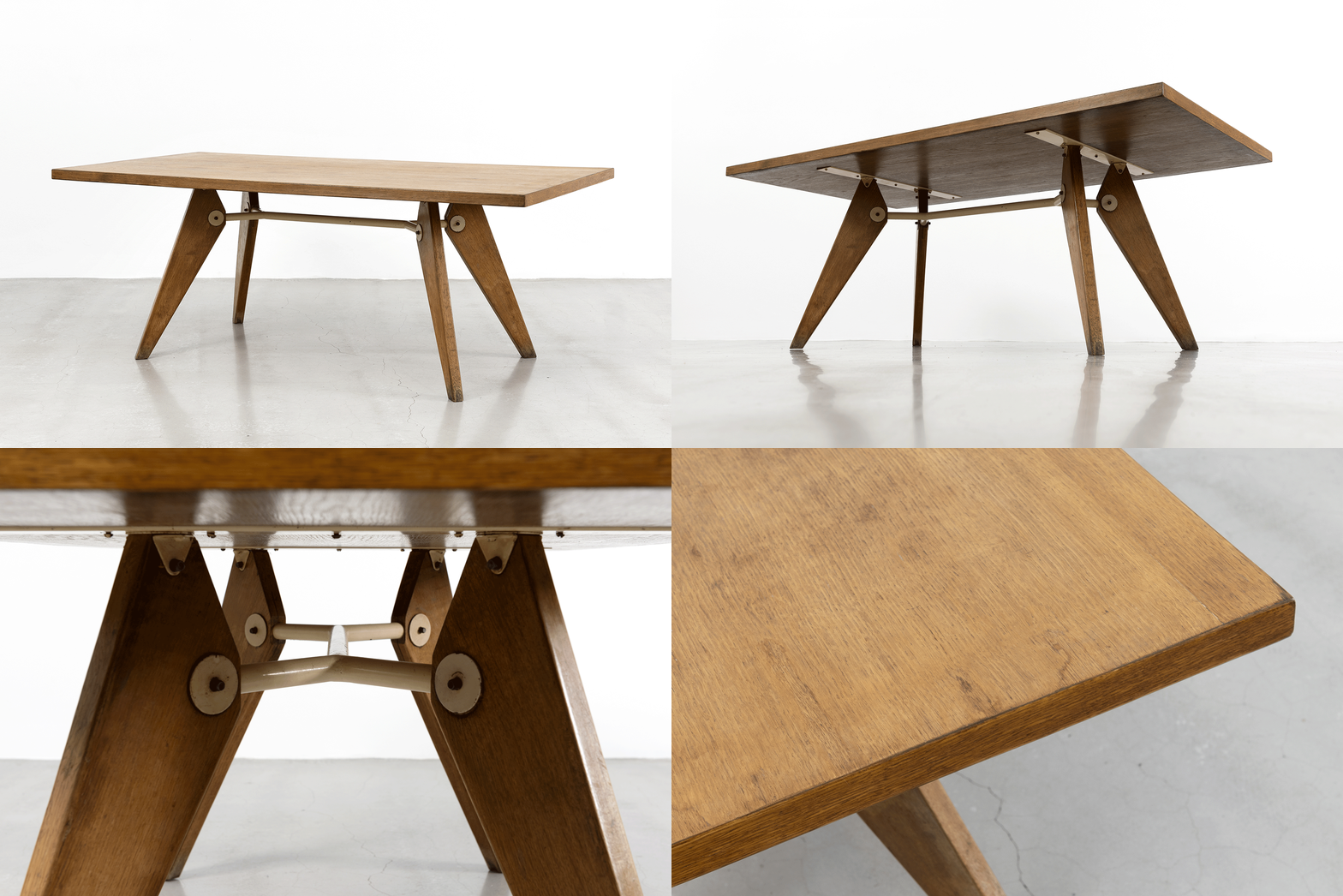
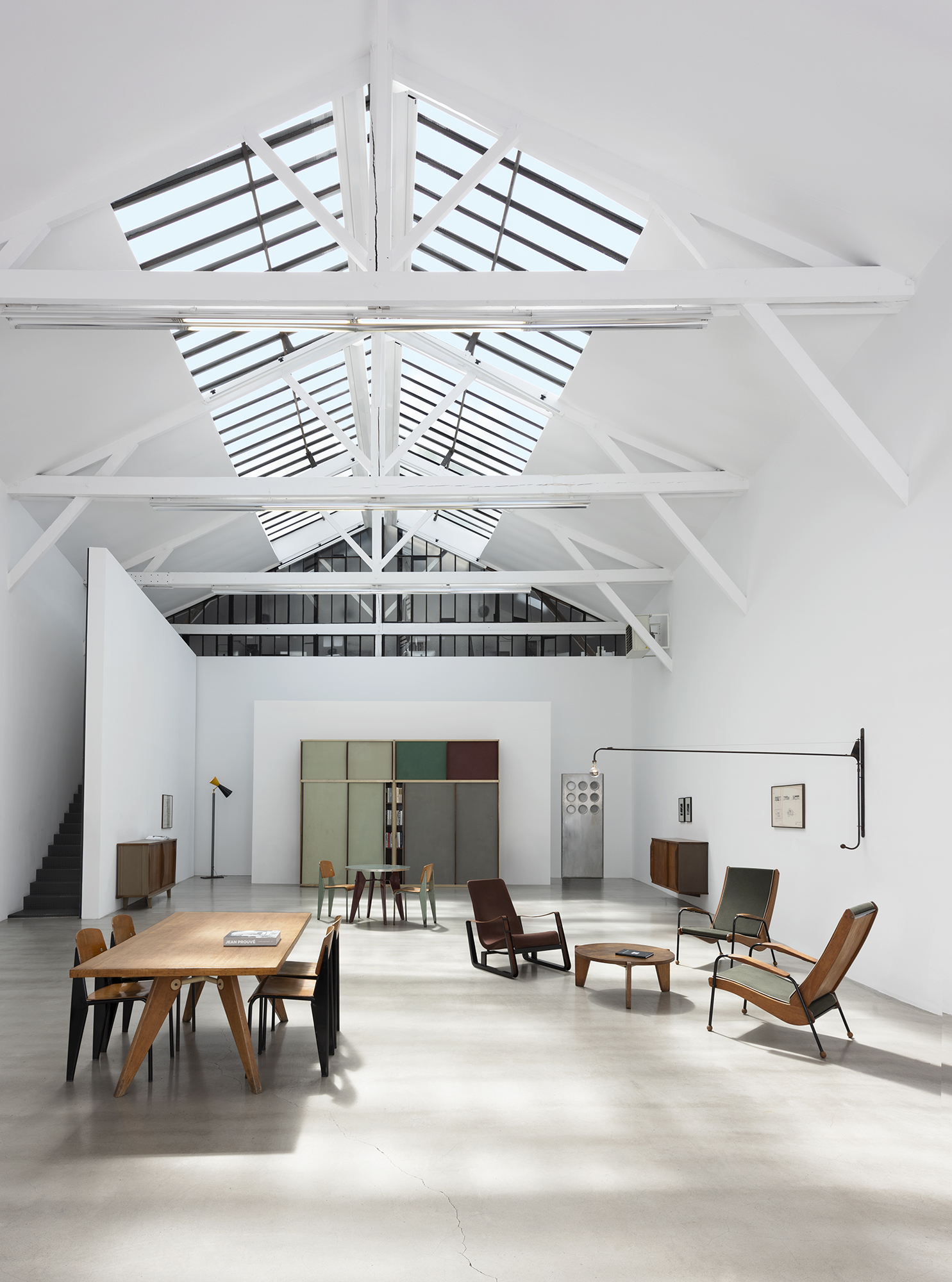
S.A.M. n°502 table, ca. 1951
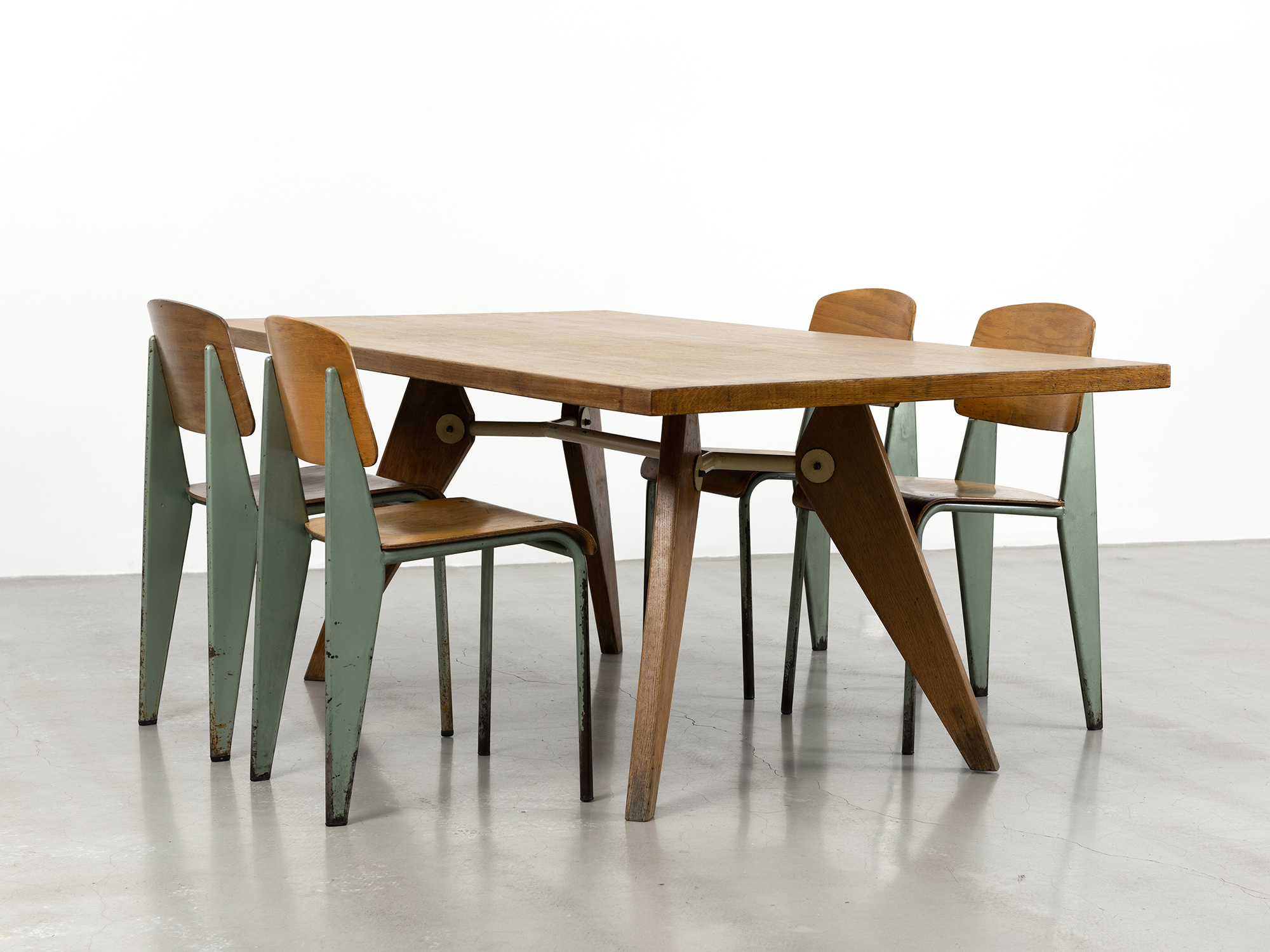
The design of this dining table, created in 1939, was revived during the War as part of a project to fit out the facilities for the staff at the Solvay plant in Dombasle.
The metal base principle already developed—flanged, tapering legs connected by a welded, double-Y tubular brace—was retained and adapted to new requirements: saving metal and a demountable system. The solid wood legs with their marked camber were mounted on the brace with metal stirrups and fixed directly to the top with brackets.
At the end of the War this S.A.M. table was made in small sets for the domestic market.
In 1947, it was given a “Meubles de France” award under its new name, the TS11 table, and later the TS12. It was modified to improve the mountings and make assembly easier: the bolted stirrups disappeared, with the tubing of the brace fitting into the legs. The metal brackets on the legs were mounted on an iron insert screwed into the underside of the tabletop.
As with the other mass-produced wooden items of furniture, the solid oak of the legs and top was gradually replaced with plated oak or an entirely different type of wood. After various changes to details—notably the mounting of the brace on the legs with machined tube—the table went into production in 1951 as no. 502, at the same time as the metal-base version.